Text size
Line height
Text spacing


The Certificate Course for Plumbers in Health Centers is a practical, competency-based training program designed to equip plumbers with the knowledge and skills required to install, maintain, troubleshoot, and repair plumbing systems within healthcare facilities. The course emphasizes safe water supply, sanitation, infection prevention, medical gas awareness, wastewater management, and compliance with health and building standards.
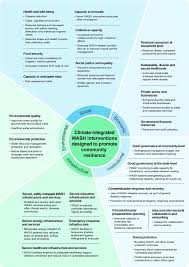
Traditional WASH monitoring often focuses on technical outputs (e.g., pipes built). However, in the context of climate resilience, WASH acts as a catalyst. Secure WASH creates the necessary stability for a community to survive and adapt to climate shocks. Integrated, multi-sectoral solutions are prioritized over fragmented, sector-specific fixes because they create mutually beneficial feedback loops: a resilient community sustains its WASH systems, and secure WASH systems sustain the community.

This module explores the critical sanitation gap in rapidly urbanising areas, shifting the perspective from traditional 'hardware-only' solutions to the City-Wide Inclusive Sanitation (CWIS) framework. Aimed at university-level engineering and urban planning students, the session analyses technical and institutional barriers, the intersection of sanitation with climate action, and strategies for equitable service delivery in complex urban environments.
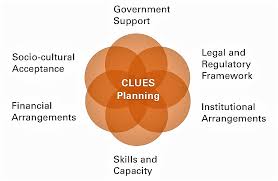
This module provides a deep dive into the Community Led Urban Environmental Sanitation (CLUES) framework, a multi-sectoral planning approach designed for complex, heterogeneous urban environments. Aimed at university students and urban planning professionals, the session explores how to bridge the gap between household needs and state-level legal requirements through a structured 7-step roadmap. Participants will learn to move beyond "one-size-fits-all" infrastructure toward a "mix of systems" that prioritises community mobilisation, technical feasibility, and resource recovery.